
Case Study: A Look Into Kaleidoscope Pictures’ Film ‘Truth & Treason’
A Film by Kaleidoscope Pictures
Distributed by Angel Studios • Theatrical Release: October 17, 2025
$6M+
U.S. Box Office
50
Shooting Days
"A"
CinemaScore
86%
Rotten Tomatoes
Truth & Treason is the culmination of more than two decades of dedicated creative work by Kaleidoscope Pictures. From the moment director Matt Whitaker first heard the story of Helmuth Hübener in 2001, this project became a defining mission in 2005 for the Provo, Utah-based production company. It stands as one of the most ambitious productions in the studio’s history—an international period drama, shot entirely on location in Lithuania, distributed theatrically by Angel Studios, and released simultaneously as both a feature film and a four-part limited series.
The story itself centers on a 16-year-old boy in Hamburg, Germany who, in the shadow of the Nazi regime, forms a small resistance group with his friends and begins secretly distributing pamphlets revealing the truth about the war. Based on the real story of Helmuth Hübener—a largely unknown historical figure—the film represents Kaleidoscope’s core creative philosophy: find stories that are true, meaningful, and largely untold, and give them the cinematic treatment they deserve.
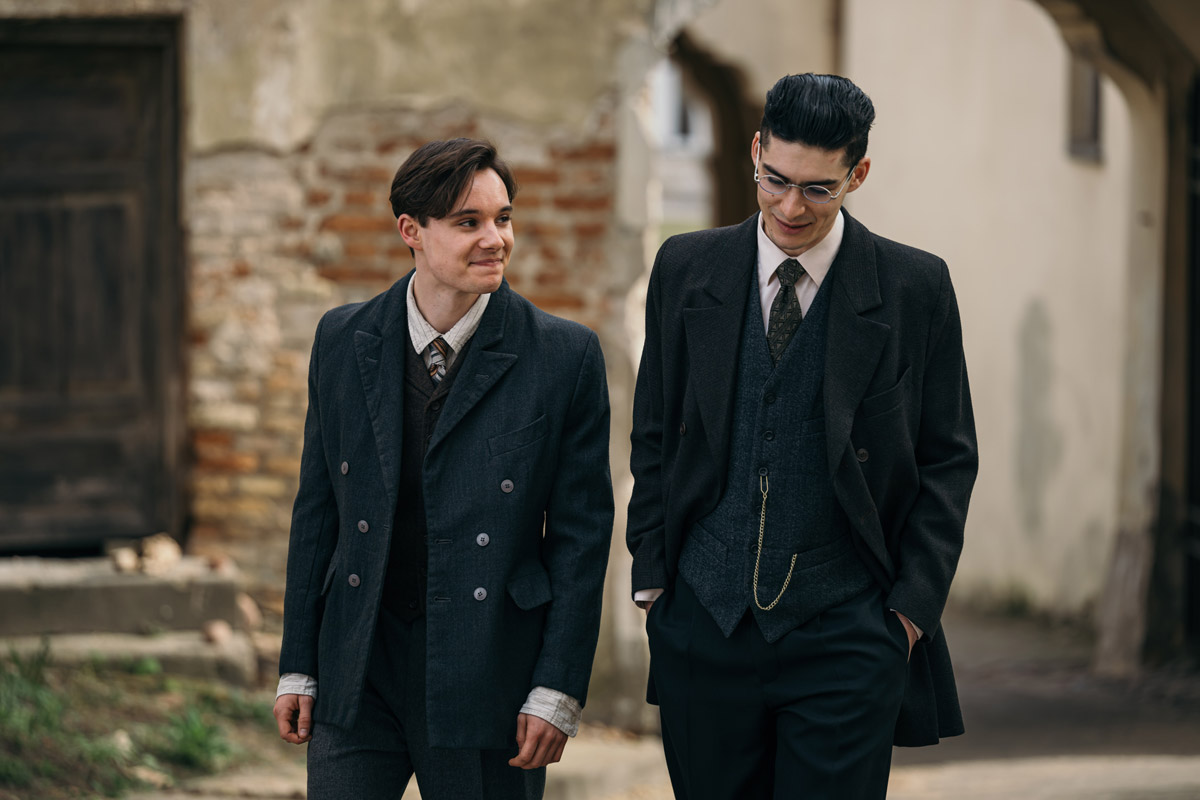
Ewan Horrocks and Nye Occomore
The Origin Of The Story: 20+ Years In The Making
The genesis of Truth & Treason is itself a remarkable story. In 2001, director Matt Whitaker met Karl-Heinz Schnibbe—one of the three boys who had formed the teenage resistance group alongside Helmuth Hübener in Hamburg during the early 1940s. Schnibbe was then in his late seventies, and his firsthand account of those years left Whitaker, in his own words, “deeply moved and determined to bring the story to the screen.”
“I felt deep in my soul that I needed to tell this story to the world.”
Matt Whitaker, Writer-Director
That early encounter produced a PBS documentary in 2002 titled Truth & Conviction—a factual exploration of Hübener’s story. But Whitaker always believed the material had the scope and emotional weight of a major dramatic film. He and Russ Kendall spent the intervening years doing what filmmakers do between passion projects: making other films, building the studio’s portfolio, and waiting for the right moment.
Kendall described the wait candidly in press materials:
“I had the honor of becoming close friends with Karl-Heinz Schnibbe, the last surviving member of this teenage Nazi resistance group. Before his passing, Karl entrusted us with their story—what they stood for and what Helmuth Hübener gave his life for at just 17.”
Russ Kendall, Producer
Producer John Foss echoed the sentiment:
“Bringing Truth & Treason to life has been one of the most meaningful journeys of my career. I’ve worked on films around the world, but this story—Helmuth’s story—has stayed with me for nearly two decades. It’s a reminder that even in the darkest times, light can come from the most unexpected places.”
John Foss, Producer
This two-decade gestation period is not a failure of development—it is a hallmark of what Kaleidoscope does. They stayed close to the material, deepened their research, interviewed everyone connected to the real events, and waited until they had the resources, the team, and the distribution infrastructure to do the story justice. When those pieces finally aligned, production moved quickly and decisively.
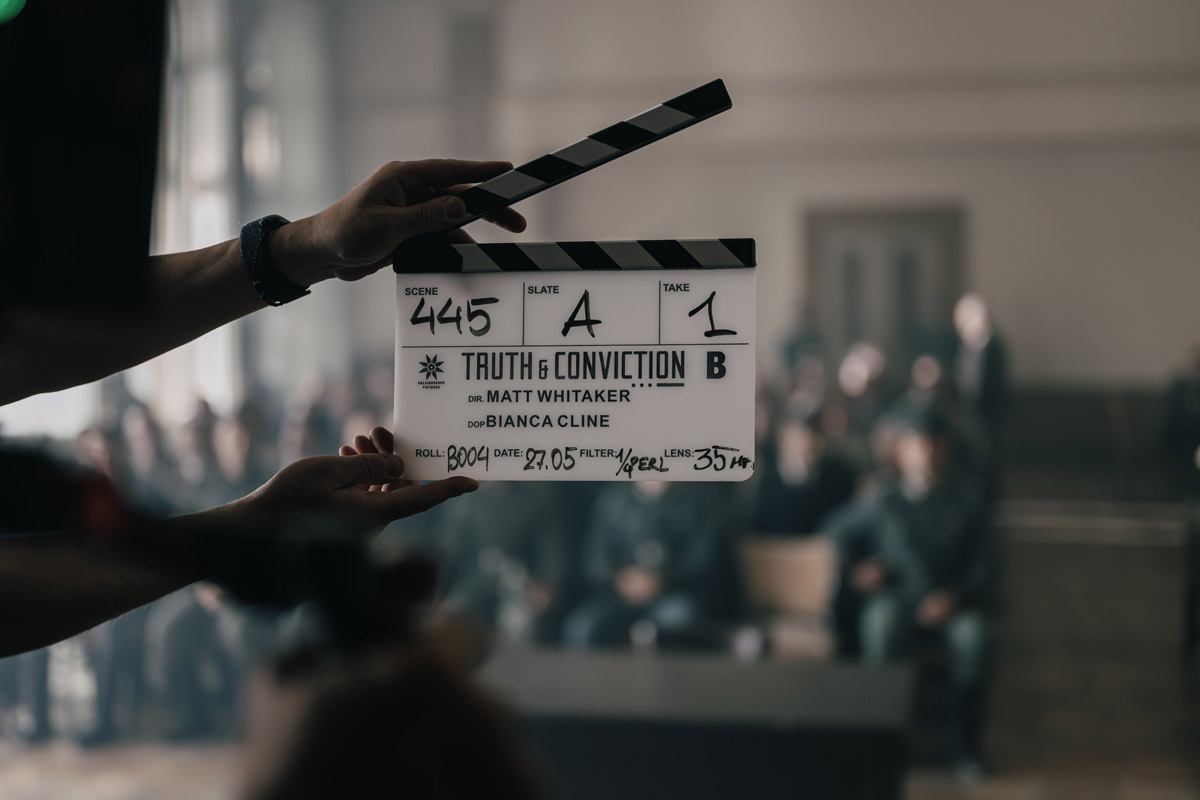
Filming begins
Development — From Documentary To Feature Film
The creative development of Truth & Treason evolved significantly before a single frame was shot. The project was originally a feature film, then structured as a four-part limited television series under the working title Truth & Conviction. This decision was made partly for practical reasons—episodic storytelling allows for a more expansive treatment of historical material—and partly because the distribution landscape for faith-aligned and values-driven content has historically favored television and streaming formats.
However, once Whitaker and his collaborators began developing the material in earnest, and once the partnership with Angel Studios was formalized, a consensus emerged: this story had the emotional scale and cinematic gravity of a feature film. Both Angel Studios and Kaleidoscope agreed that Hübener’s journey demanded the big screen.
The solution was characteristically ambitious: produce both. The footage shot over 50 days in Lithuania would be edited into a theatrical feature film for wide release, and an expanded version of the same story would be released as a four-part limited series exclusively on Angel’s streaming platform. It was a dual-format production—a logistical and creative challenge that required the editorial strategy to serve two distinct releases simultaneously.
The screenplay itself, co-written by Whitaker and longtime collaborator Ethan Vincent, underwent meticulous research. Wherever Hübener is speaking words of his leaflets, the dialogue draws directly from his own recorded words, letters, and testimony. The script was designed to capture the political atmosphere of wartime Hamburg with precision—the BBC broadcasts, the Nazi propaganda, the social pressures placed on ordinary citizens—while keeping the emotional center fixed on three teenage boys who chose conscience over conformity.
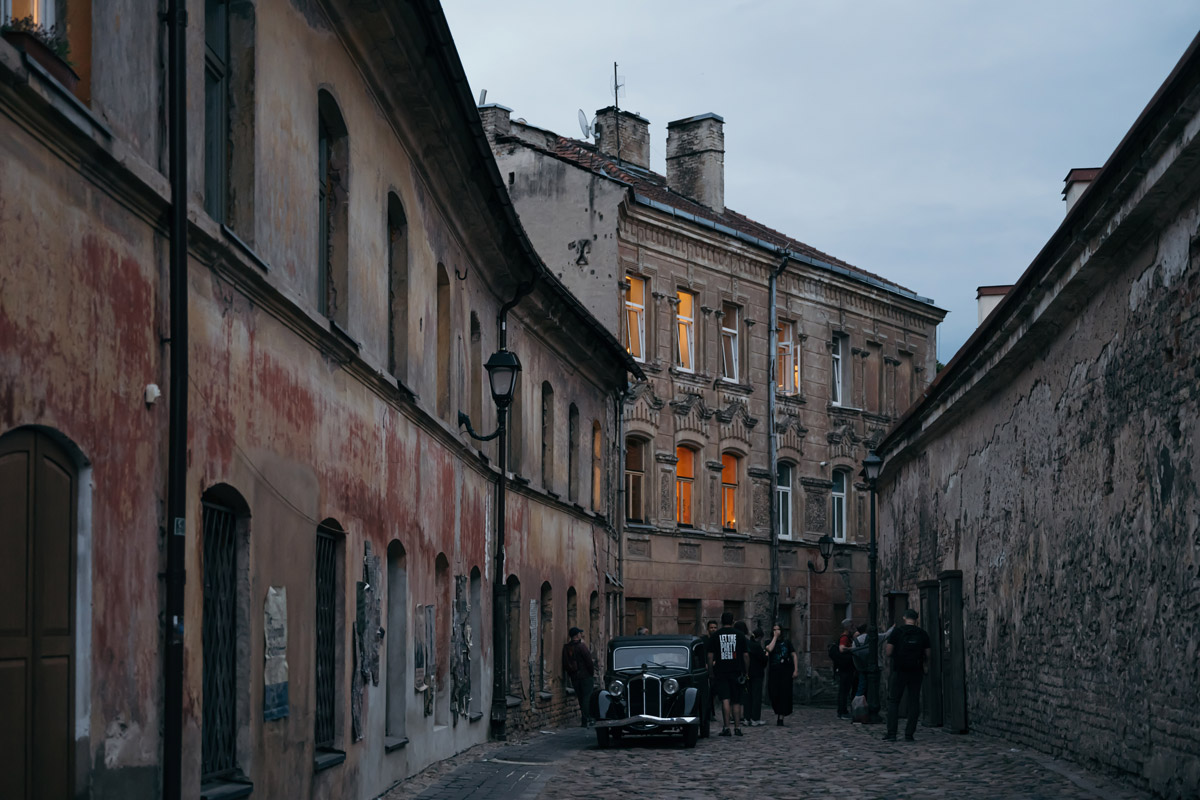
Vilnius, Lithuania
Finding The World — Location Scouting & The Decision To Film In Lithuania
One of the most consequential creative decisions in the production of Truth & Treason was the choice to film in Vilnius, Lithuania rather than in Germany itself. This decision was not made out of convenience or cost alone—it was made because Vilnius was, for this story, simply the better cinematic choice.
Kendall and Foss had first visited Lithuania in 2016 while scouting locations for another project.
Their experience there—particularly with local production partner Baltic Film Services—was transformative. When Truth & Treason entered active development, returning to Vilnius was an easy call.
“We first visited Lithuania in 2016, looking for 19th-century locations for a film. Not only did we find them, but we also met the excellent partner company, Baltic Film Services. At that time, we were also beginning the TV series Truth and Conviction. After seeing Vilnius, we immediately sent photos to the show’s writer, Matt Whitaker. He came a week later and fell in love with the locations, some of which even influenced the story’s development.”
Russ Kendall, Producer
Vilnius’s preserved historical architecture—cobblestone streets, 1930s and 1940s-era building facades—made it an almost ideal stand-in for wartime Hamburg. The city’s old town required minimal dressing to evoke the period. Baltic Film Services, whose credits include HBO’s Chernobyl and Netflix’s Stranger Things, brought deep expertise in period production logistics, wardrobe sourcing, and location management.
Costume supervisor Ruta Lecaite, a Lithuanian hire, coordinated a pan-European wardrobe effort that included sourcing authentic WWII-era military uniforms from multiple collections across the continent. The production team later noted that the historical authenticity of the settings had a profound emotional effect on cast and crew alike.
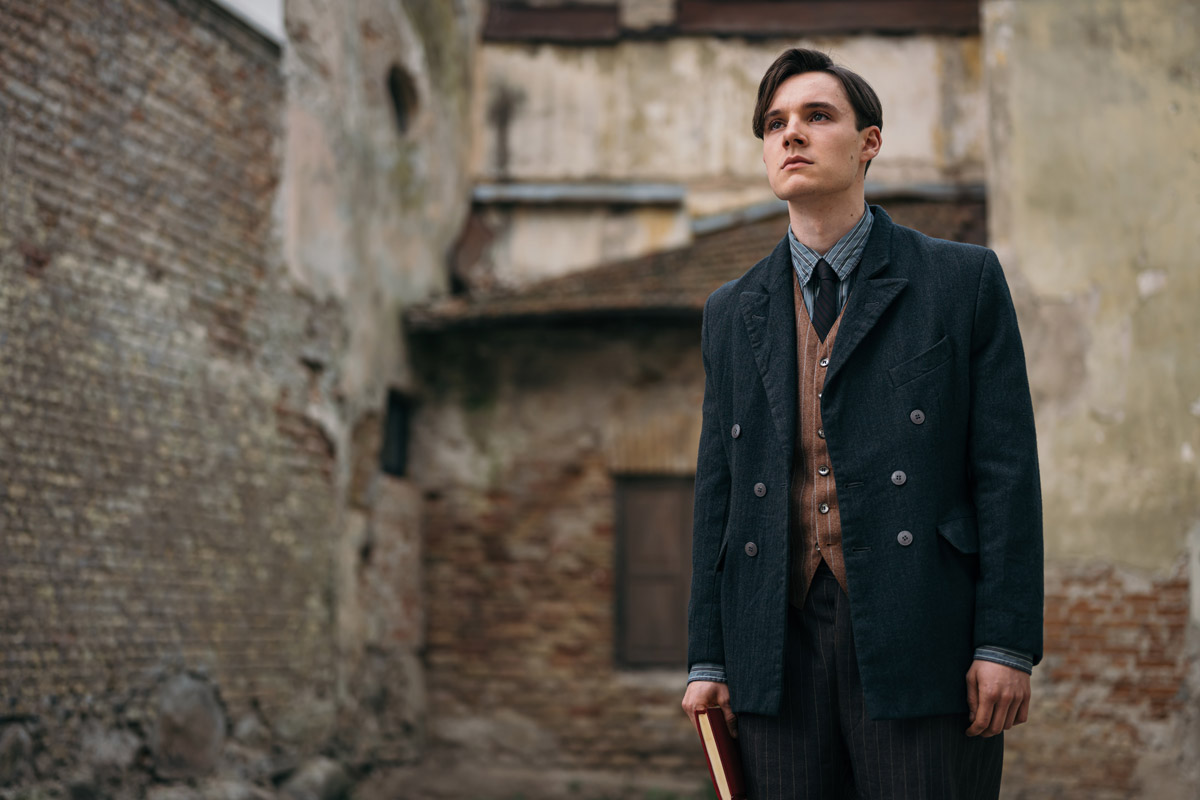
Ewan Horrocks as Helmuth
Casting — Finding Helmuth
Casting the lead role of Helmuth Hübener was the central creative challenge of the pre-production process. The entire film hinges on the audience’s investment in a teenage boy—his vulnerability, his intelligence, his growing moral clarity in the face of overwhelming institutional pressure. Finding an actor who could carry that weight authentically was not optional; it was foundational.
When English actor Ewan Horrocks (best known from The Last Kingdom) came to Whitaker’s attention through a screen test, the director’s reaction was immediate and visceral. He later described the moment of recognition with remarkable clarity:
“I saw this tape, probably on my iPhone, and my eyes opened up and I said, ‘Wait a minute! Rewind, start that again. I just saw something there that was incredible. He had a light in his eyes.’ We went to meet him in person... He walked in, and I said, ‘This is the kid. This is Helmuth.’ I called my wife that night and broke down and started crying. I shouted, ‘We found him. You’ll see.’”
Matt Whitaker, Director
Surrounding Horrocks, the production assembled an international cast that brought significant experience to the ensemble. Rupert Evans, best known for The Man in the High Castle and Hellboy, was cast as Erwin Mussener—the Nazi investigator assigned to track down the resistance group. The New York Times singled out Evans’ performance for particular praise, noting the character’s rare moral complexity within the genre. Ferdinand McKay (Karl-Heinz Schnibbe), Daf Thomas (Rudi Wobbe), and Nye Occomore (Salomon Schwarz) completed the core cast, with Sean Mahon as Helmuth’s Nazi sympathizer stepfather.
Prior to principal photography, the cast underwent rigorous workshops to develop period-accurate behavior, dialect, and emotional grounding. Whitaker also had the four young leads spend extended time together before cameras rolled—a deliberate investment in the authenticity of the friendships that form the emotional core of the story.
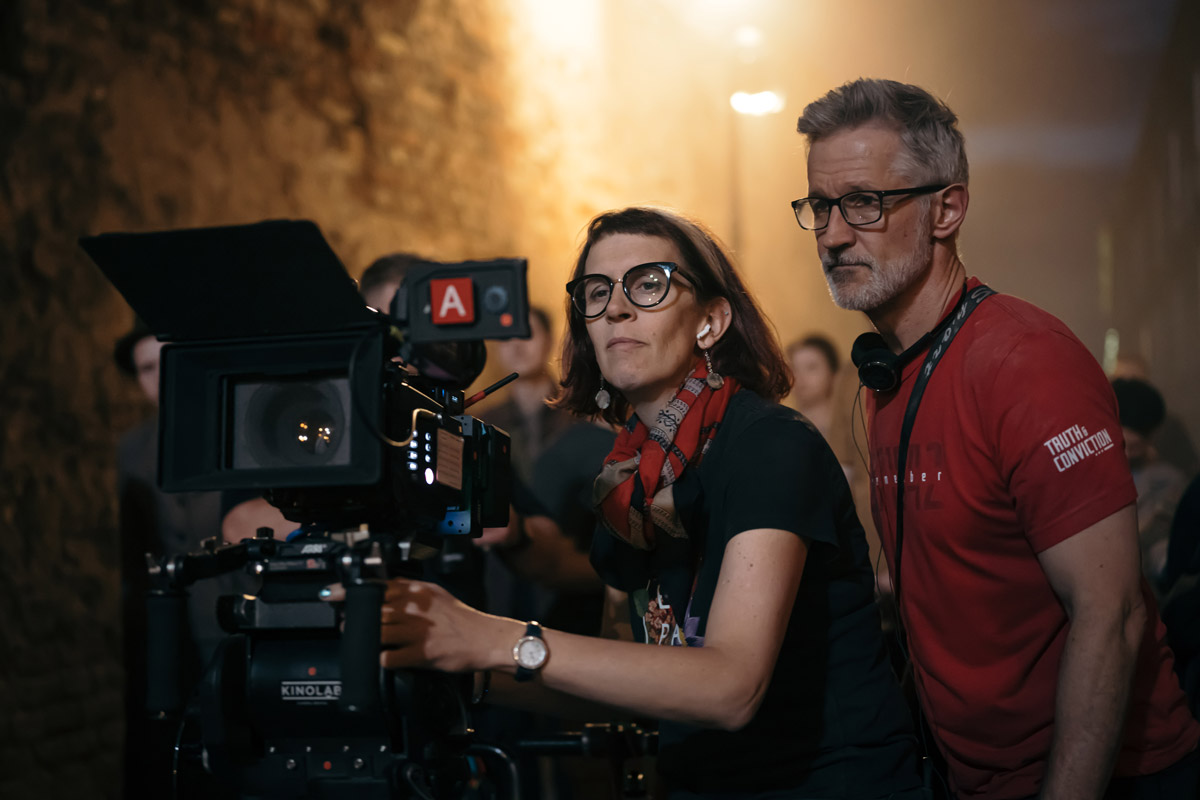
Bianca Cline and Matt Whitaker
Crafting The Visual Language
The visual approach to Truth & Treason was developed in close collaboration between Whitaker and cinematographer Bianca Cline (Rust, Marcel the Shell with Shoes On). Their shared goal was a visual grammar that felt both historically authentic and emotionally alive—images that supported the story rather than distracted from it.
To develop that grammar, Whitaker and Cline spent significant time in pre-production studying period films and original black-and-white photographs from 1930s and 1940s Germany. They were drawn specifically to what Whitaker described as the “bloom” of light characteristic of the era—the way shadows pooled, the way lamplight separated figure from background in darkened interiors. This visual research shaped decisions about lens choices, lighting ratios, and color grading that would give the film its distinctive look.
The contrasts of light and darkness became thematic as well as aesthetic. Many of the film’s most charged scenes—the secret radio listening sessions, the underground pamphlet printing, the Gestapo interrogations—are lit primarily by single-source practical light, creating a tension between what is visible and what is concealed that mirrors the story’s central conflict.
The production also made deliberate use of the physical constraints of its locations: the tightness of tunnels and prison cells, the claustrophobia of cramped apartment interiors, the oppressive openness of official Nazi spaces. These environmental choices were intentional storytelling tools, not merely logistical realities.
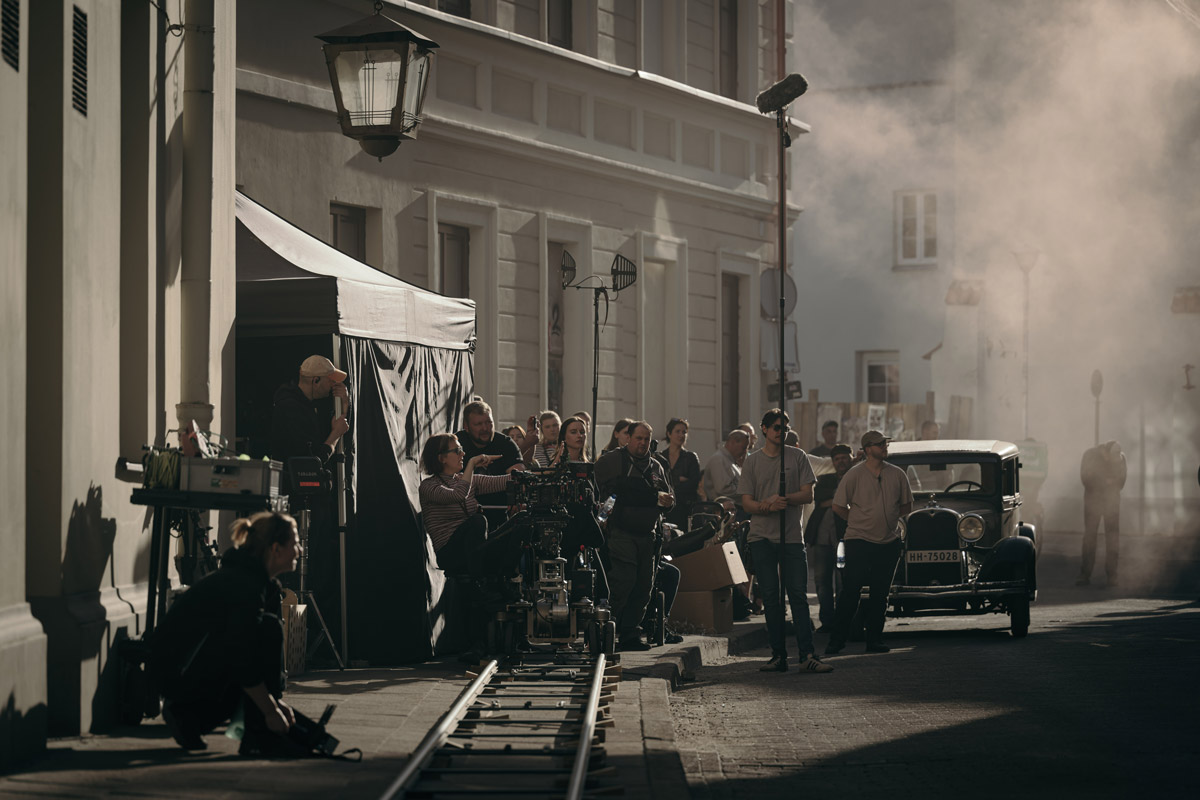
Setting the stage in Vilnius
Principal Photography — 50 Days In Vilnius
Principal photography began on April 29, 2024, and ran for fifty days in and around Vilnius, Lithuania. The production was a genuinely international undertaking: an American creative team, a British and Welsh principal cast, Lithuanian and European crew hires through Baltic Film Services, and a historical subject matter rooted in German wartime history—all coordinated from a Utah-based production company.
The 50-day schedule was demanding by any measure. The production was designed and executed as a four-part limited series, with the shoot planned entirely around the episodic format and the depth of storytelling that structure allows. As the project developed, both Kaleidoscope and Angel Studios recognized that the material had the scope and emotional weight to also work as a theatrical feature film. That the series coverage was rich enough to support a second editorial pass and produce a stand-alone two-hour film without a single additional day on set says everything about the quality of what the team captured in Vilnius.
Working with Baltic Film Services—a production services company with WWII-period production experience from major international projects—provided Kaleidoscope with access to infrastructure, local talent, and logistical support that would have been prohibitively difficult to replicate independently. The Lithuanian crew brought not only technical skill but a kind of historical and geographical affinity for the material that added another layer of authenticity to the set.
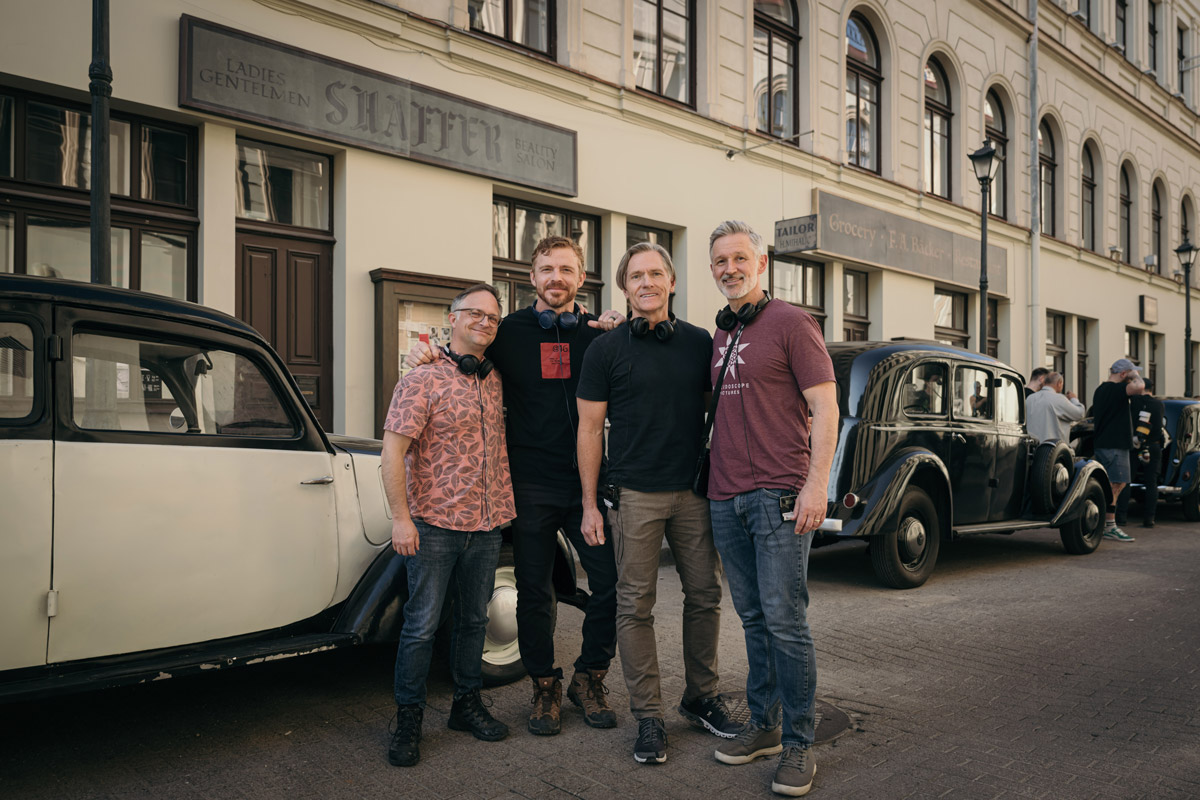
Ethan Vincent, John Foss, Russ Kendall, and Matt Whitaker
The Team — Who It Takes To Make A Film At This Scale
What distinguishes a production like Truth & Treason from a purely commercial undertaking is the depth of creative investment at every level. This was not a project assembled quickly around a market opportunity. It was a project built around a story—and the team behind it reflects that.
Leadership & Creative Core
- Matt Whitaker (Writer / Director / Producer) — Two-decade relationship with the source material. Co-wrote the screenplay with Ethan Vincent. Directed principal photography and oversaw the film’s overall creative vision.
- Ethan Vincent (Co-Writer) — Long-time Whitaker collaborator. Contributed to historical research and character development. Specialist in translating true stories into dramatically compelling screenplays.
- Russ Kendall (Producer / Co-founder) — Principal of Kaleidoscope Pictures. Oversaw financing structure, distribution negotiations, and production logistics. Personal connection to Karl-Heinz Schnibbe underpinned his commitment to the project.
- John Foss (Producer) — Seasoned international film producer (The Card Counter). Brought deep experience in feature film production management and international co-productions.
- Jon Erwin, Adam Thomas Anderegg, Micah W. Merrill (Executive Producers) — Provided executive oversight and additional resources, with Jon Erwin’s presence connecting the project to the broader faith-aligned film ecosystem.
- Bianca Cline (Director of Photography) — Brought a sophisticated visual sensibility rooted in character-driven independent filmmaking. Co-developed the film’s visual grammar with Whitaker.
- Aaron Zigman (Composer) — Grammy-associated composer with credits including The Notebook and The Six Triple Eight. Wrote an original orchestral score that shaped the film’s emotional arc.
- Baltic Film Services (Production Services Partner) — Lithuanian-based production services company with credits on HBO’s Chernobyl and Netflix’s Stranger Things. Managed local crew hiring, logistics, permits, and period-appropriate set operations.
- Jurgita Gerdvilaitė (Production Designer) — Lithuanian production designer who transformed Vilnius into a convincing recreation of 1940s Hamburg, overseeing period-accurate sets, props, and environments from Nazi offices to residential interiors.
- Supporting Departments — Production design, hair and makeup, props, stunts (fight choreography and chase sequences), and a large local crew in Vilnius collectively brought the 1940s Hamburg world to life.
Distribution & Marketing
- Angel Studios (Distributor) — Values-aligned distribution company behind Sound of Freedom ($250M worldwide). Over one million paying Guild members across 170 countries help curate and market releases. Managed theatrical booking across approximately 2,000 North American screens and international markets.
- Brandon Purdie (EVP & Head of Theatrical, Angel Studios) — Led the theatrical release strategy, including the announcement at CinemaCon 2025 and the marketing campaign leading to the October 17 release.
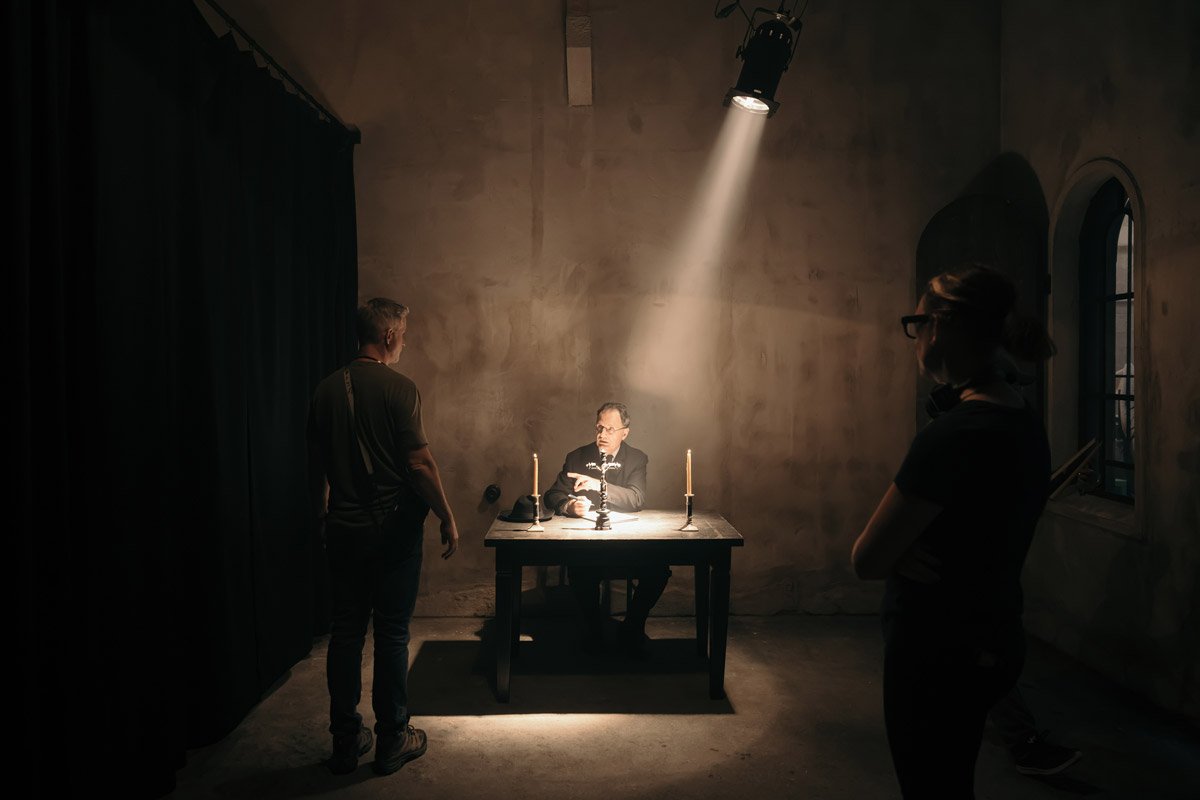
Matt Whitaker and Bianca Cline
Post-Production — Shaping Two Films From One Shoot
The post-production phase of Truth & Treason was unusually complex by independent film standards. The 50 days of footage shot in Lithuania had to be shaped into two distinct deliverables: a 121-minute theatrical feature and a four-episode limited series with expanded storytelling.
This dual-format approach required the editorial team to make fundamentally different decisions for each version. The feature film required compressed pacing, tighter scene selection, and a singular narrative arc that could sustain a continuous two-hour viewing experience. The limited series required the same material to breathe differently—scenes could run longer, subplots could receive fuller treatment, and the episodic structure could develop character relationships with more patience.
Aaron Zigman’s original score was composed and recorded to serve the emotional needs of both formats. His orchestral work draws on the conventions of classic WWII dramatic scoring while maintaining an intimacy appropriate to the story’s focus on ordinary teenagers rather than military campaigns.
Color grading played a key role in establishing the film’s visual period identity. Working from the reference material Whitaker and Cline had assembled in pre-production, the grading process sought to replicate the tonal quality of period photography—slightly desaturated, with warm highlights and cool shadow tones—without losing the vibrancy necessary for the theatrical presentation.
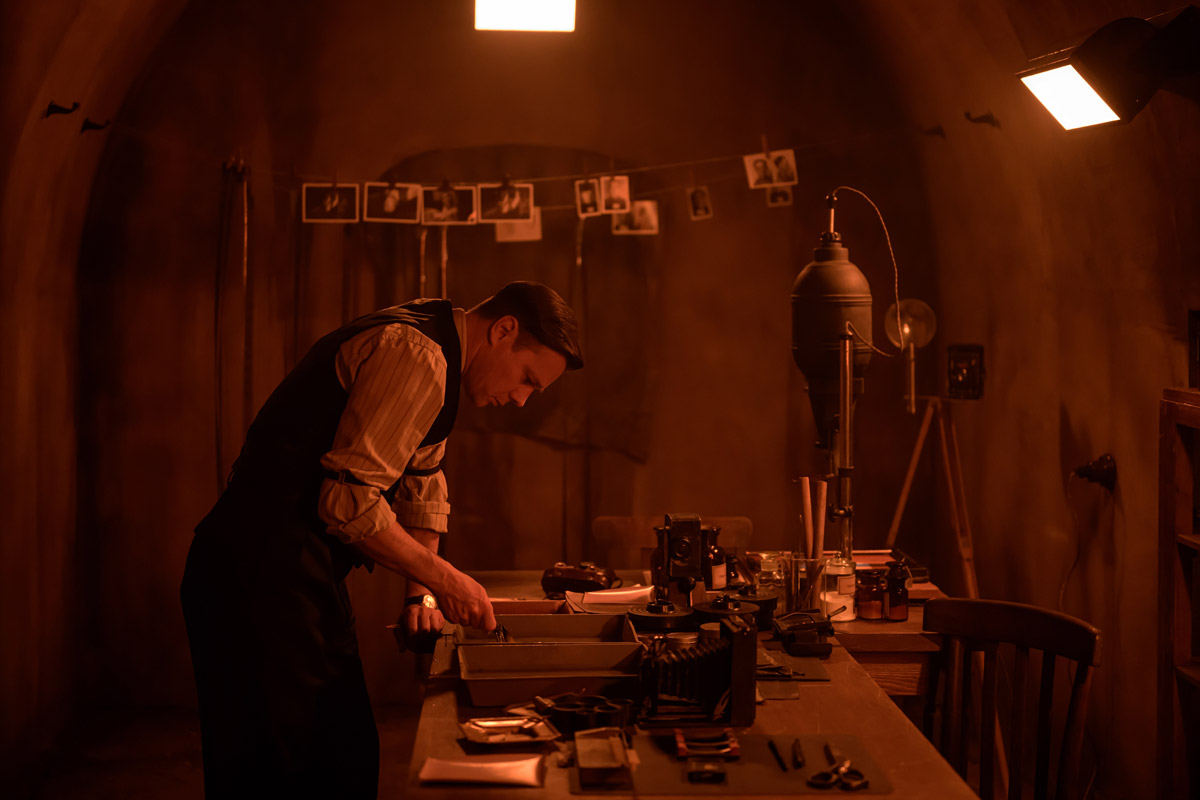
Rupert Evans as Erwin Mussener
Distribution Strategy — Angel Studios & The Guild Model
The decision to distribute through Angel Studios was a strategic alignment of values as much as a business decision. Angel’s model is unusual in the film industry: it operates with more than two million paying Guild members from over 170 countries who actively participate in deciding which films the platform markets and distributes. This creates an unusually engaged pre-existing audience for each release—one that has literally voted for the film before it opens.
The announcement of Truth & Treason was made at CinemaCon 2025 in Las Vegas—the film industry’s major theatrical exhibitor conference—which signaled Angel’s commitment to a full theatrical window. Brandon Purdie, Angel’s EVP of Theatrical, characterized the studio’s commitment to the big screen as unequivocal.
“TRUTH & TREASON is a riveting, edge-of-your-seat film, where one teenage boy stands against the deadliest threat the world has ever faced. Matt Whitaker’s direction brings Helmuth Hübener’s incredible story to life, thrilling and inspiring audiences while leaving them profoundly moved.”
Brandon Purdie, EVP & Head of Theatrical, Angel Studios
The theatrical release on October 17, 2025 opened in approximately 2,000 North American screens. The film debuted at #6 on the domestic box office chart for the weekend—a remarkable placement for an independent period drama without major studio marketing support—and earned over $2.6 million in its opening weekend.
Simultaneously, the limited series’ first two episodes were released on Angel’s streaming platform on the same day, with subsequent episodes rolling out on October 31 and November 7. Digital release followed on December 2, 2025, and a Blu-ray/DVD release came on January 20, 2026.
This staggered, multi-window release strategy—theatrical, streaming series, digital, physical—maximized the commercial potential of the production while serving different audience preferences for how and when they consume content.
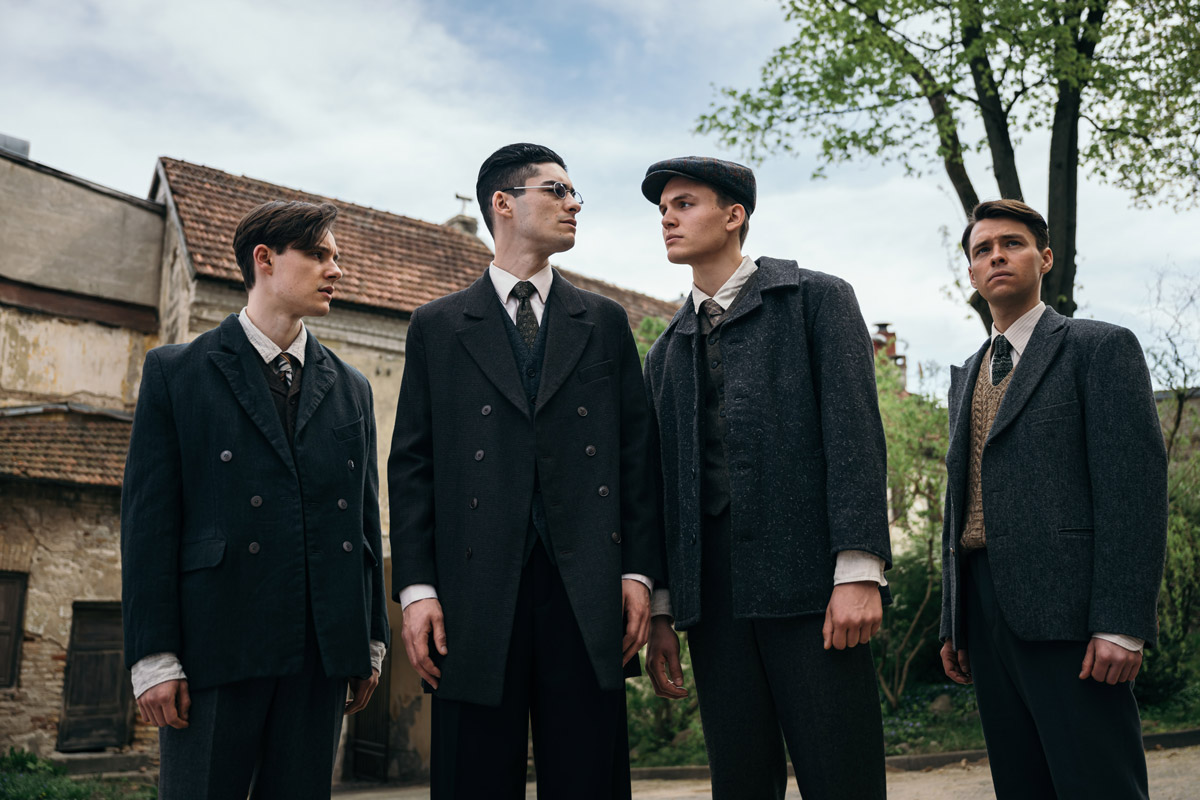
Principal cast
Critical & Audience Reception
Truth & Treason received a CinemaScore of “A” from opening-weekend audiences—a strong indicator of word-of-mouth potential and audience satisfaction. On Rotten Tomatoes, 86% of critics’ reviews were positive, with a consensus noting the film’s strong performances and timely thematic resonance. The New York Times praised the acting specifically, singling out Rupert Evans’ performance as Erwin Mussener.
Critical reception was not without nuance. Several reviewers noted that the film operates within conventional period drama frameworks and does not take significant formal risks. Variety described it as “a well-intentioned, competently made film that never transcends the safety of its own conventions.” But even critics who identified these limitations acknowledged the moral weight of the material and the quality of the performances.
Where the film resonated most powerfully was with general audiences, particularly those who responded to its themes of individual moral courage in the face of state-sponsored conformity. Multiple reviewers noted the film’s contemporary relevance—its parallels to modern questions about institutional loyalty, propaganda, and the cost of dissent—as a source of particular power. One reviewer observed that the film arrives “just when there are too many Generation Z men, informed by TikTok and video games, hence very confused about Nazism,” noting its educational and cultural significance beyond pure entertainment.
The film ultimately earned $6,044,364 in U.S. and Canadian theaters against a limited-release platform—a meaningful result for an independent period drama and a validation of the distribution strategy.
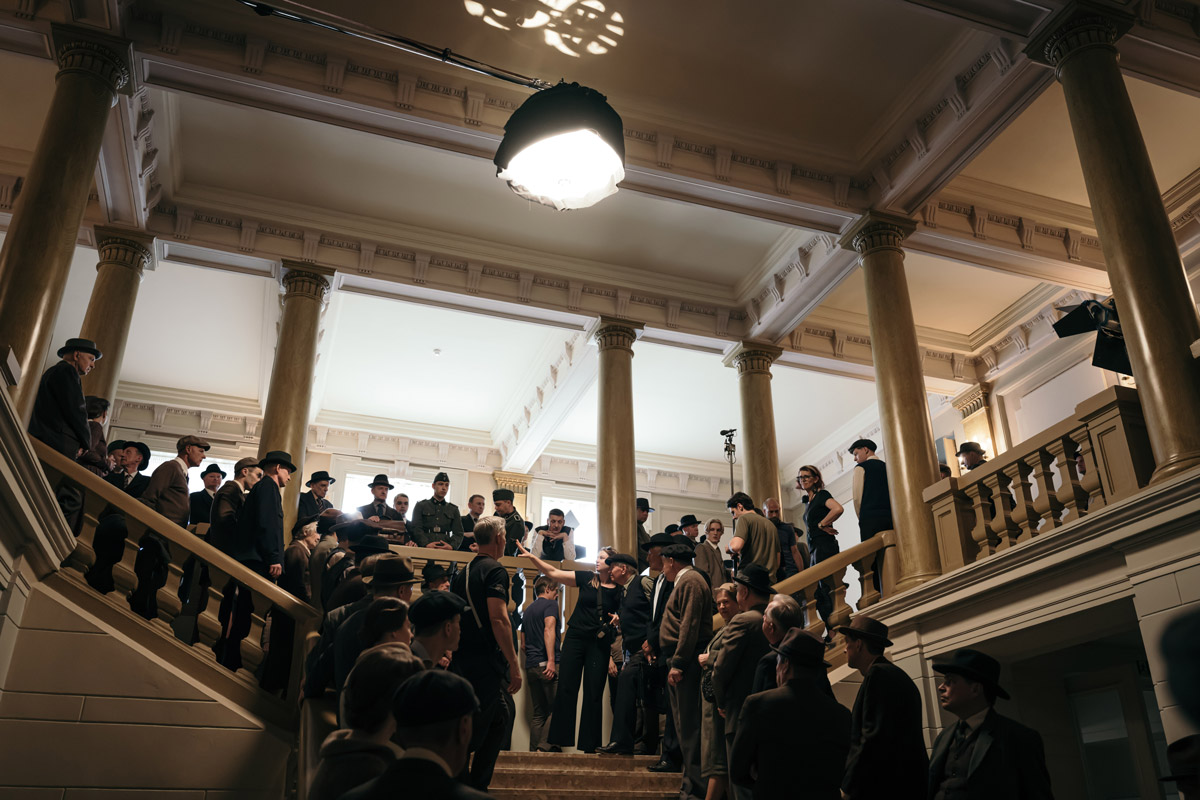
Cast and extras
The Kaleidoscope Creative Philosophy
What Truth & Treason illustrates, above all, is what Kaleidoscope Pictures believes filmmaking is for. The studio’s stated mission—to create “inspiring entertainment through artistically expressing hope for the positive values of life”—is not marketing language. It is a genuinely held creative conviction that has shaped every project in their catalog.
Kaleidoscope does not make films about heroes who happen to exist in history. They make films about ordinary people who chose something extraordinary—and they do so with the research depth, the production discipline, and the creative humility to let those true stories speak for themselves. The twenty-year journey from Whitaker’s 2001 meeting with Karl-Heinz Schnibbe to the 2025 theatrical release of Truth & Treason is not unusual for this company. It is emblematic.
The production model they have developed over two decades reflects this philosophy: build a trusted creative team, find the right international partners, structure the financing carefully, and never compromise on the story. They work at the scale that the story demands—not at the scale that the budget dictates.
“We’re not telling this story for thrills. We’re inviting the audience to feel how it was.”
Matt Whitaker, Director
Truth & Treason is the fullest expression yet of that invitation.
At A Glance
Production Company | Kaleidoscope Pictures — Provo, Utah |
Director | Matt Whitaker |
Screenplay | Matt Whitaker & Ethan Vincent |
Producers | Matt Whitaker, Russ Kendall, John Foss |
Executive Producers | Russ Kendall, John Foss, Jon Erwin, Adam Thomas Anderegg, Micah W. Merrill |
Director of Photography | Bianca Cline (Rust, Marcel the Shell with Shoes On) |
Original Score | Aaron Zigman (The Notebook, The Six Triple Eight) |
Film Editor | Adam L. Banks |
Production Partner | Baltic Film Services — Vilnius, Lithuania |
Principal Cast | Ewan Horrocks, Rupert Evans, Ferdinand McKay, Daf Thomas, Nye Occomore, Sean Mahon |
Production Location | Vilnius, Lithuania |
Principal Photography | April 29 – June 2024 (50 shooting days) |
Format Delivered | Feature Film + 4-Part Limited Series |
Distributor | Angel Studios |
Theatrical Release | October 17, 2025 (Worldwide) |
Rating | PG-13 |
Running Time | 2 hours 1 minute |
Opening Weekend | $2.6M+ (2,000 theaters — North America) |
Total U.S. Gross | $6,044,364 |
CinemaScore | A |
Rotten Tomatoes | 86% (Critics) |
IMDb Rating | 7.1 / 10 |
Connect with Kaleidoscope Pictures
Kaleidoscope Pictures turns extraordinary true stories into award-winning films, and they have spent over two decades proving it. From a 50-day shoot in Lithuania to a nationwide theatrical release, Truth & Treason is the result of story-first filmmaking, world-class international partnerships, and an uncompromising creative vision. If you have a story worth telling, one rooted in moral courage, human resilience, or history the world has never seen, Kaleidoscope Pictures is the team to bring it to the screen.